Three millennia down the line and The Odyssey is still thriving.
After the film’s release, UK sales of the poem jumped 95%. Spotify reported a 680% rise in audiobook plays worldwide. Hell, even 550% more people want to learn Greek.
In the US, readers have joined library waitlists that are long enough to count as a quest in their own right.
So yes, the film sold a lot of tickets. More interestingly, it stimulated a huge economic boost for media outlets, publishers and book stores.
Not bad for a story that was first told when the most popular form of "content creation" was Ironworking. (LinkedIn News, Axios)
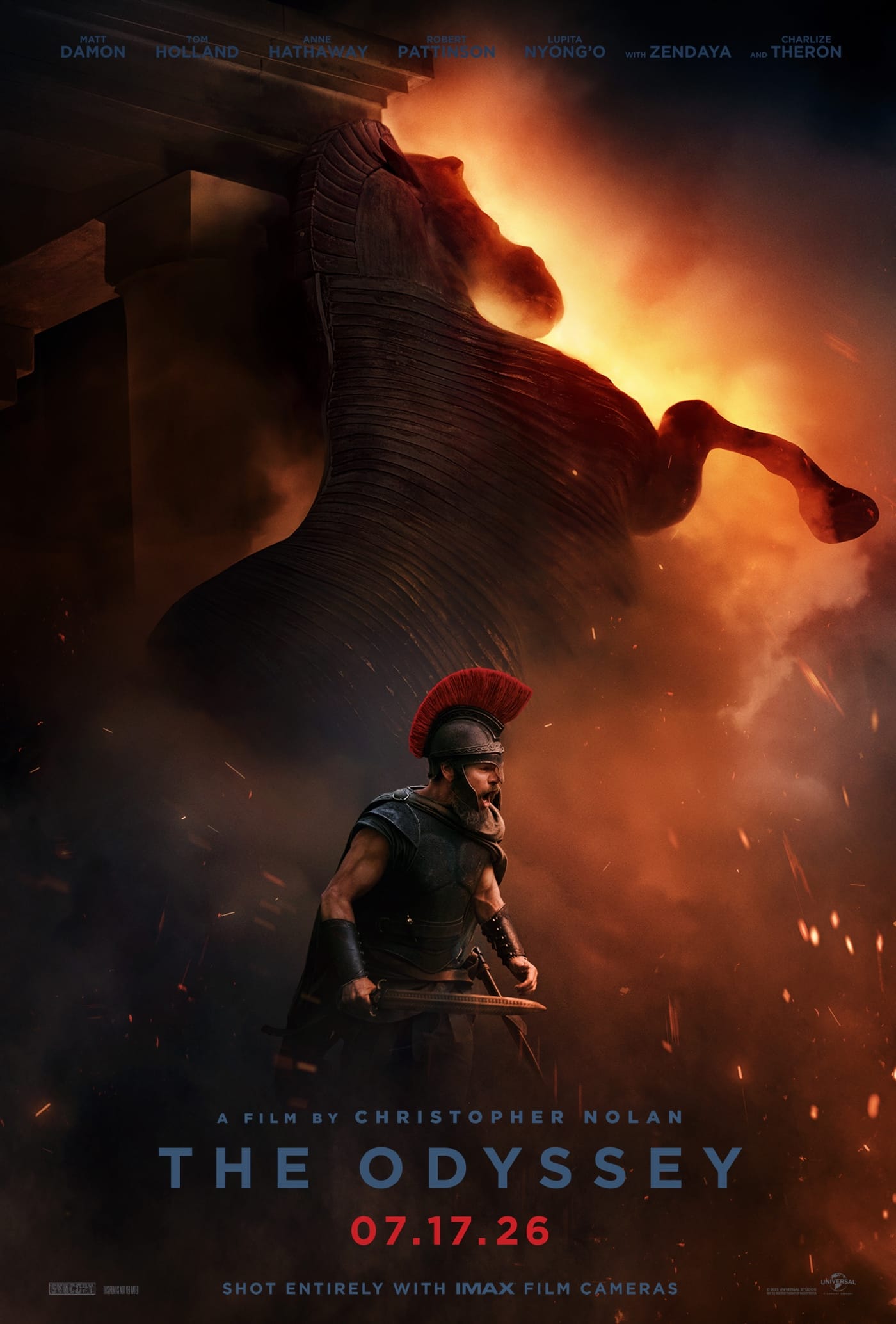
The Odyssey is an ancient Greek epic poem, attributed to Homer and usually dated to around the eighth century BCE. It grew out of an oral tradition: performed, reshaped and passed on.
Without spoiling either book or film, it is about a difficult journey home after a war. That journey tackles themes of identity, loyalty, endurance, temptation, and the question of what “home” means to the person returning to it, and those who are to greet him.
It also changes with every translation. Emily Wilson’s version is currently the bestselling edition in the US, while Robert Fagles’ translation and Gareth Hinds’ graphic adaptation have enjoyed their own lift. There is no single, sealed consumer product called The Odyssey. It is more like a cultural source file that each generation opens, fiddles with and exports in their preferred format. (Publishers Weekly)
Nolan makes the old feel new
Nolan’s film is the first feature shot entirely with IMAX cameras. The scale is part of the sales pitch: this story matters, and you ought to leave the house for it. Or, as Nolan put it, “It’s not a story — it’s the story.” (NBCUniversal)
Modest as ever, Chris.
Audiences seem happy to indulge in the story. By the end of its second weekend, The Odyssey had earned nearly $640 million worldwide, helped considerably by premium-format 70mm IMAX screenings. The effect on the book business had started much earlier. US print sales across editions were already up 76% year to date before the film opened, after growing 42% in 2025 following the project’s announcement. (AP, Publishers Weekly)
That is the secret sauce of a good adaptation: it gives people a new way into the original.
- The cinema offers spectacle
- Social media makes it inescapable
- Audiobooks let us consume it while driving or cooking
- Publishers put out handsome new covers with actors plastered on to them, garnished with an irremovable "Now a major motion picture" sticker.
Then eventually, somebody is inspired to book a course on Ancient Greek, only to discover that learning the Greek alphabet cannot be done at 1.5x speed. But that's another matter. The point is...
The adaptation is the legacy
Christopher Nolan is not rescuing The Odyssey from obscurity, and it certainly wasn't an under-the-radar litbro title. It has spent centuries quietly getting its grubby greek mittens all over nearly every hero story we've been told since.
James Joyce squeezed its architecture into a single day in Dublin with Ulysses. The Coen brothers sent its broad outline through Depression-era Mississippi in O Brother, Where Art Thou? Margaret Atwood’s The Penelopiad and Madeline Miller’s Circe shifted attention to voices Homer kept on the fringes. (University of Chicago Library)
Music has got in on the act too. Jorge Rivera-Herrans developed EPIC: The Musical in public across TikTok, Instagram and Discord, with fans contributing auditions, illustrations and animatics as the project took shape. The songs have since accumulated billions of streams. A tale born in oral performance is being passed around as music on phones; history does famously enjoy showing off. (BroadwayWorld)
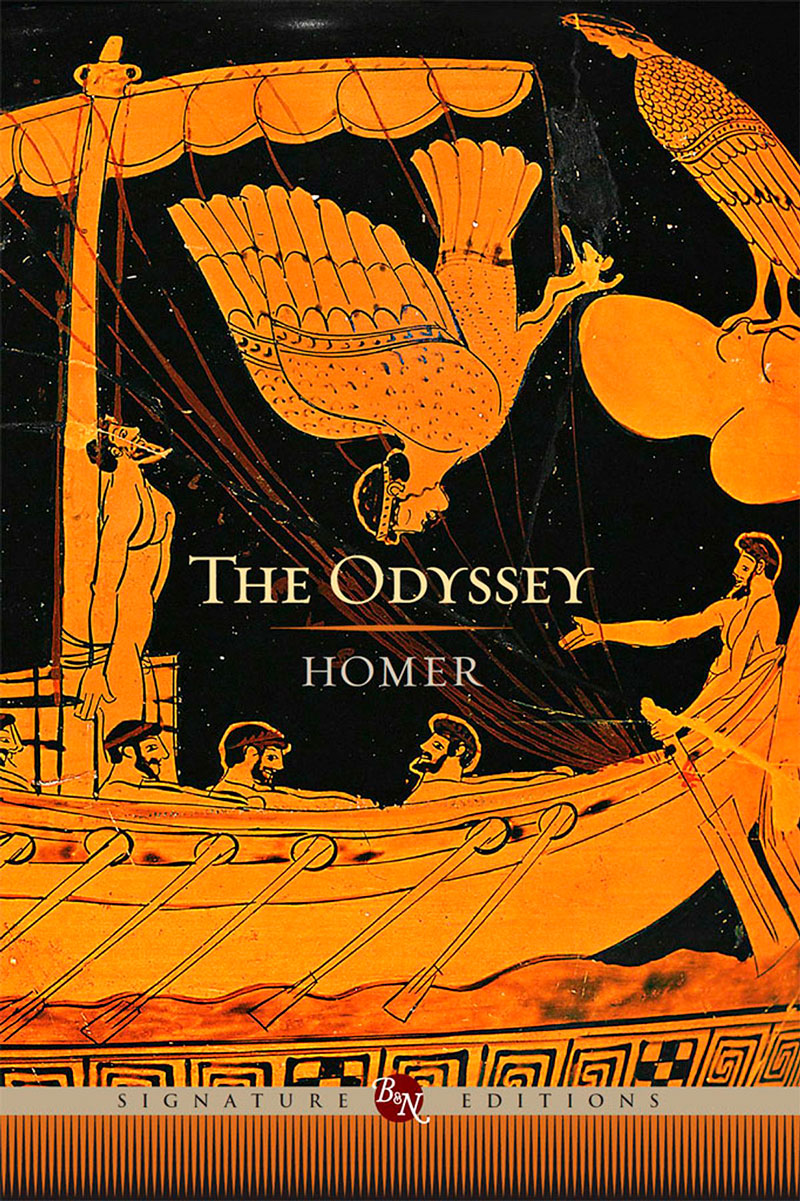
The visual afterlife goes back further still. Homeric scenes appeared on ancient pottery and have carried on through painting, sculpture, theatre, film, games and fan art, and it is easy to see why. A voyage, a wanderer, a distant home, an unknown horizon: the images do the work before anybody has to explain them.
Culture rarely stays politely in one space. Give anything enough attention and sooner or later, somebody adds a checkout button.
A film ticket leads to the IMAX upgrade, then perhaps a new translation. Then how about an audiobook, a poster, or maybe even a holiday search?
Wife: Husband, i'm on cheapholidays4u.com but I can't seem to find flights to Ithaca! Husband: Strange! Try control alt delete love, I'll check the wifi's still working...
Not every curious viewer will become a classicist, but plenty will buy a beautiful hardback from TK/J Maxx, place it at a slight angle on the coffee table and let it radiate educational intent.
But here's the thing:
None of these purchases exists in isolation. The film revitalised the poem for 2026, but story was there before. It will keep moving after the Nolan camp has packed up. No single format owns this audience, they share and pass people between them.
If we must call this “transmedia”, fine i guess. But the useful bit isn't the label. It's the fact that the same idea resonates in countless unique forms.
The branding lesson
Brands spend fortunes trying to manufacture what The Odyssey has had for millennia: recognition, emotional shorthand and permission to be reinterpreted.
The lesson here is not to neck some Ouzo and capitalise on the idea “Epic”. Please, people, Greece has suffered enough.
What matters is the balance between familiarity and surprise. Nolan brings a story people half-know, then adds his reputation, an insane cast and a boundary pushing format. Publishers have translation, design and timing to play with. Online creators invite the audience to join in on the hype, and each channel is recognisably part of the same thing.
A brand can work the same way, provided it has an actual point of view to begin with. Keep to your message, stay true to your promise and double down on your perspective; Just adapt the format.
People should recognise your idea without feeling they have been served the same thing before.
The Odyssey lasts because it is the most relevant of human stories. It remains a useful way to talk about ambition, exile, and journeys that take an really, really, really long time. Christopher Nolan made its relevance impossible to miss. It's enormous, expensive and, naturally, best viewed on the biggest screen available.
...as Nolan intended.
A few useful takeaways
- An adaptation done right can grow the market for the original, rather than eat away at it.
- The cultural shift begins way before the box office opens.
- Every format a story takes should bring something unique: spectacle, cultural participation, or a really nice hardback with sprayed edges.
- Familiar stories travel further when the execution feels distinctive.
- Social media is most impactful when audiences can remake and extend an idea
- Strong brands protect the message at their centre but allow almost everything else to evolve.