How the Dean and Dimebag controversy led to a much needed brand refresh
Dimebag Darrell is, without a doubt, the most important endorsee that Dean Guitars ever had. He is also the reason the company spent five years in court.
In April, a federal judge in Florida ruled in Dean's favour and said the guitars belong to Dean. The right call, in my opinion, and one that was the most important thing to happen to the brand in twenty years.
The Dean Guitars - Dimebag Dispute
In August 2021, In Dime We Trust, the estate trust run by Dime's longtime partner Rita Haney, announced the end of a seventeen-year relationship with Dean and filed suit against parent company Armadillo Distribution Enterprises the same day. The claim was that Armadillo had no right to the Razorback and Stealth body shapes Darrell had developed with the company, and that the trademark registrations covering them had been filed without authorisation. Breach of contract came bundled with it.
On 24 April 2026, the US District Court for the Middle District of Florida granted summary judgment to Armadillo, dismissing eleven of the thirteen claims. That included every claim about who owns the guitar models. The court's reasoning came down to years of prior use and good faith commercial activity. Two claims are still live, one of them covering the artwork on the Dean From Hell, which is the lightning bolt everyone pictures when they picture Dime. The estate says it intends to appeal.
So it is not finished. But the ownership question, which was the one that mattered, has an answer.
Fifty years, condensed
Dean Zelinsky builds the ML, V and Z. Heart, Kansas and ZZ Top get hold of them.
Production moves overseas, focus shifts abroad, US sales collapse.
Elliott Rubinson rebuilds the brand around artists: Schenker, Batio, West, Mustaine.
He signs with Dean again, and is murdered onstage in December, months later.
Over the V and Z shapes. Dean eventually loses and is barred from selling them.
Haney ends the endorsement and files over Razorback and Stealth.
Eleven of thirteen claims dismissed. Dean owns the shapes.
Armadillo files to restructure, with liabilities reported up to $50m.
A brand carried by one endorsee is not a brand
Before Dime, Dean was a Chicago guitar company with three good shapes and a rack of seventies rock endorsements. After 1997 it was Elliott Rubinson's rebuild, run out of Tampa on the back of an artist roster. Dime sat at the top of that roster, and by the mid 2000s he had become the entire identity of the company. Say Dean to a metal player, and they see the ML shape with a lightning bolt.
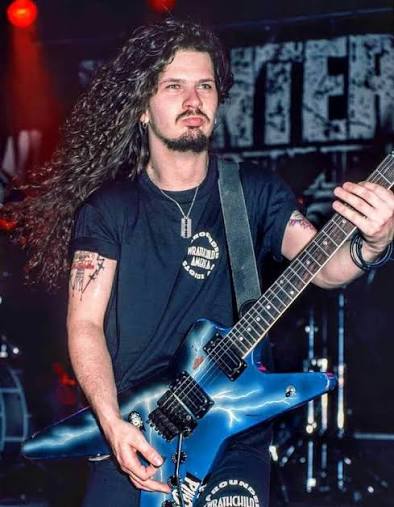
That is a marketing win for sure. But it quietly becomes a structural problem. Endorsements are is rented attention. You don't own it, you can't renew it unilaterally, and the person on the other side of it has their own view of what their name is worth. If you cannot survive losing an endorsement, then it was never an asset. Sadly, Dean spent five years and a fortune in legal fees finding that out the hard way.
The Dean ML - The shape was the real asset
The ML arrived at NAMM in 1977, five years before a young Darrell Abbott picked one up. Dean Zelinsky drew it as a hybrid of a Flying V and an Explorer and named it after his childhood friend Matthew Lynn. Dime made the ML famous to the masses, but he did not invent it, and the court's prior use reasoning is the legal wording for ruling in Dean's favour.
Reading the lawsuits together, a clear pattern emerges. Dean lost the shapes it borrowed from Gibson and kept the shapes it drew. Gibson took Armadillo to court over the V and Z, won, and left Dean banned from marketing and selling those iconic shapes. Gibson received a single dollar in statutory damages, but the money was never the point. Dime's estate came for the Razorback and Stealth, both developed in house with Dime, and the ownership claims were thrown out.
The Guitar Transcends the Paperwork
Nothing about the ruling changes what Dime did to the appeal of instrument. His iconic chainsaw tone, domination over squeals and pinch harmonics, and wildly inventive playing was the reason a numerous generations of players wanted a pointy guitar with a Floyd Rose in the first place, myself included. Trademark law decides who gets paid, but It has no jurisdiction over the culture an instrument builds.
To Rita Haney, ending the deal was the only way to protect how Dimebag Darrell's legacy. I understand the instinct, the legacy was safe as a result of Dime's impact on the guitar and metal scene. No lawsuit filing could alter that.
The Dean ML - Dime's or Dean's?
The fallout of this story is on the wall in my living room: A Dean ML 79 in black to blue fade. Floyd Rose in tow. No lightning bolts graphic, no signature, no initials on the truss rod cover.
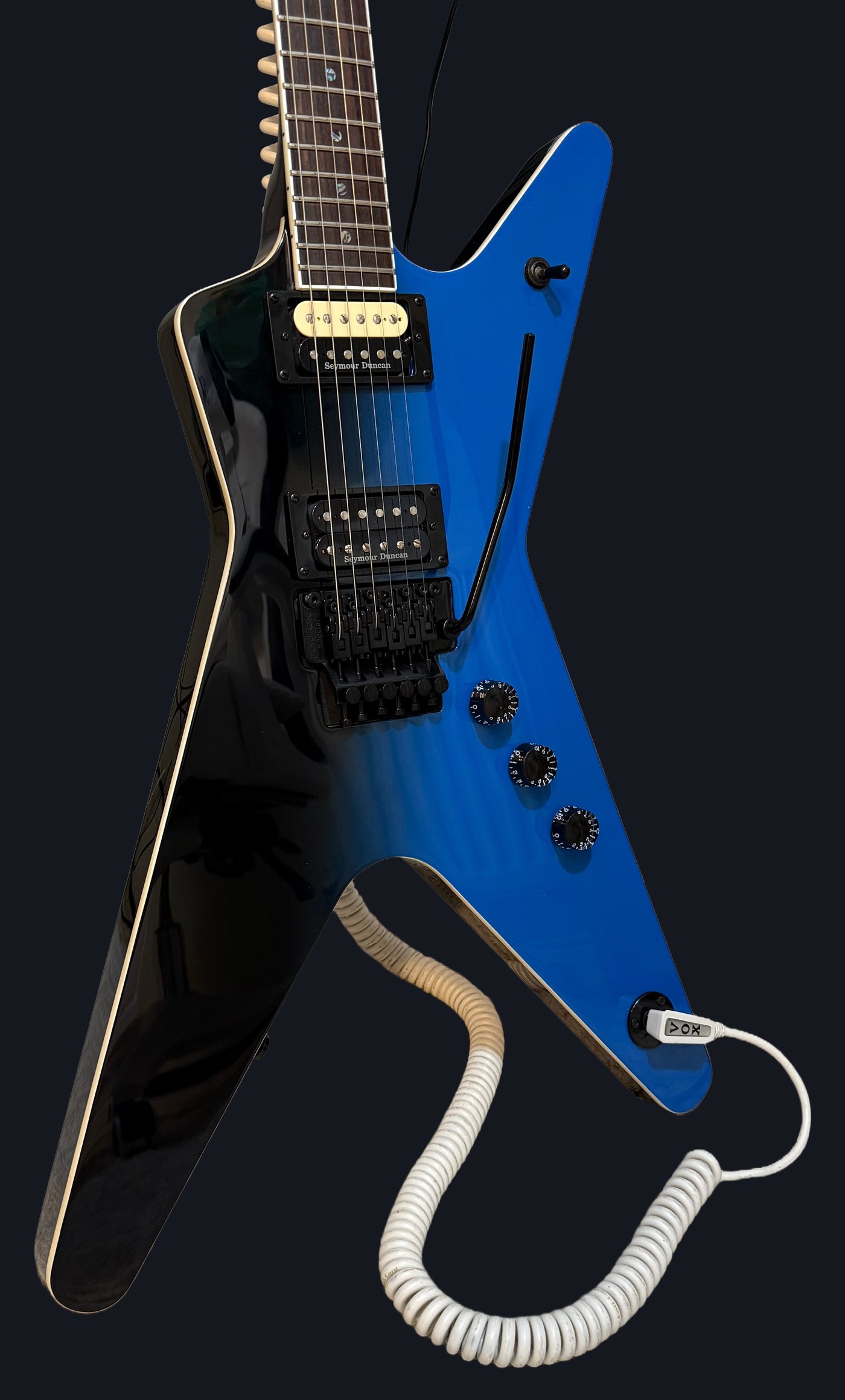
Is it there because of Dimebag's influence on me? yes, 100%. I can't claim otherwise. In the same way Angus Young brought me to my love for the Gibson SG, and John Mayer to my love for the Stratocaster, these models are seared into my love for guitar through the artists that played them. But I want these instruments to be mine, not Dime, Angus or John's. Their influence makes me want to carve out my own space in the guitar world, and I want to be influenced by them, not copy them entirely.
The ML79 post lawsuit has been hard to come by. and the blue-black fade was ready to go. To me, the Lightning bolt is Dime, but the ML is the legacy behind him. and I'm glad to be a part of that
That is the part of a brand that no lawsuit produces and no endorsement rescues. Somebody has to make a good thing.
Longevity is the Brand
Dean has been sold, left for dead, sued, and is currently restructuring, but the shapes carry on either way, because they are fifty years old and are still recognisable across a dark room. Very few guitar companies can say that about anything they have drawn since.
What transfers
Three things, and none of them are about guitars.
Do not let one person become your brand. Borrow their audience, pay them properly, be grateful for the reach, and keep building the thing that works when they leave. They always leave eventually.
Own what you actually made. Register it, document it, use it consistently and keep the receipts, because prior use is what stands up when someone comes to argue about it years later.
Make the product good. Everything else in this story is noise around one fact, which is that people are still buying MLs in 2026, and what they are buying is the guitar. Not the controversy, not the endorsement. Not Dime's deft touch. Just an instrument that is the result of this legacy.